
Resource Hub
Toolbox of Documents & Guides
Last Updated: April 2026
Langoustine, Nephrops & Dublin Bay Prawn — A Complete Industry Guide
Langoustine — also known as Nephrops norvegicus, Dublin Bay prawn, Norway lobster, or simply ‘prawn’ in many fisheries — is one of the most valuable species landed in UK, Irish and Norwegian waters. This small, orange-pink crustacean underpins hundreds of fishing businesses and a major export trade for the North Atlantic region.
But the way we catch, handle, grade and prove the quality of Nephrops is changing fast. New welfare regulations, sustainability schemes, buyer demands and automation technologies are reshaping the industry from seabed to supermarket shelf.
This guide brings together essential information for fishermen, regulators, buyers and partners — helping you understand the species, the markets, and the modern processing technologies now driving the sector forward.

Species & Markets
Species Overview
Scientific name: Nephrops norvegicus
Common names:
- Langoustine (international seafood trade)
- Dublin Bay prawn (Ireland)
- Norway lobster (Norway / scientific)
- Scampi (UK buyers / retail)
Distribution
Nephrops are found throughout the North-East Atlantic, including:
- Scottish waters (North Sea, West Coast)
- Irish Sea and Celtic Sea
- Skagerrak and Barents Sea
- Norwegian fjords and shelf grounds
Markets & Value
- Nephrops are the second most valuable shellfish species landed in the UK, after scallops.
- In Ireland, Dublin Bay prawns represent ~40% of the value of demersal landings.
- Norway has an expanding high-quality live and frozen Nephrops trade into the EU and Asia.
- The primary markets are fresh whole product (live/chilled), frozen-at-sea, scampi tails, and increasingly, premium retail packs with provenance and welfare claims.
Species and grades only create value when they align with market expectations. Understanding how buyers assess quality, reject product, and reward consistency is essential to capturing full value from the catch.
Grades & Regulations
Size Regulation (ICES / EU 2406/96)
The size of Nephrops norvegicus (langoustine) is determined by carapace length (CL), measured from the posterior margin of the eye socket to the posterior mid-dorsal margin of the carapace, excluding the rostrum.
This standard measurement aligns with ICES and Seafish protocols and is recognised in EU marketing regulations.
Reference Framework:
- Regulation (EC) No 2406/96, Annex IV – Common Market Standards for Fishery Products.
- ICES Measurement Protocols – Nephrops norvegicus (2024 guidance).
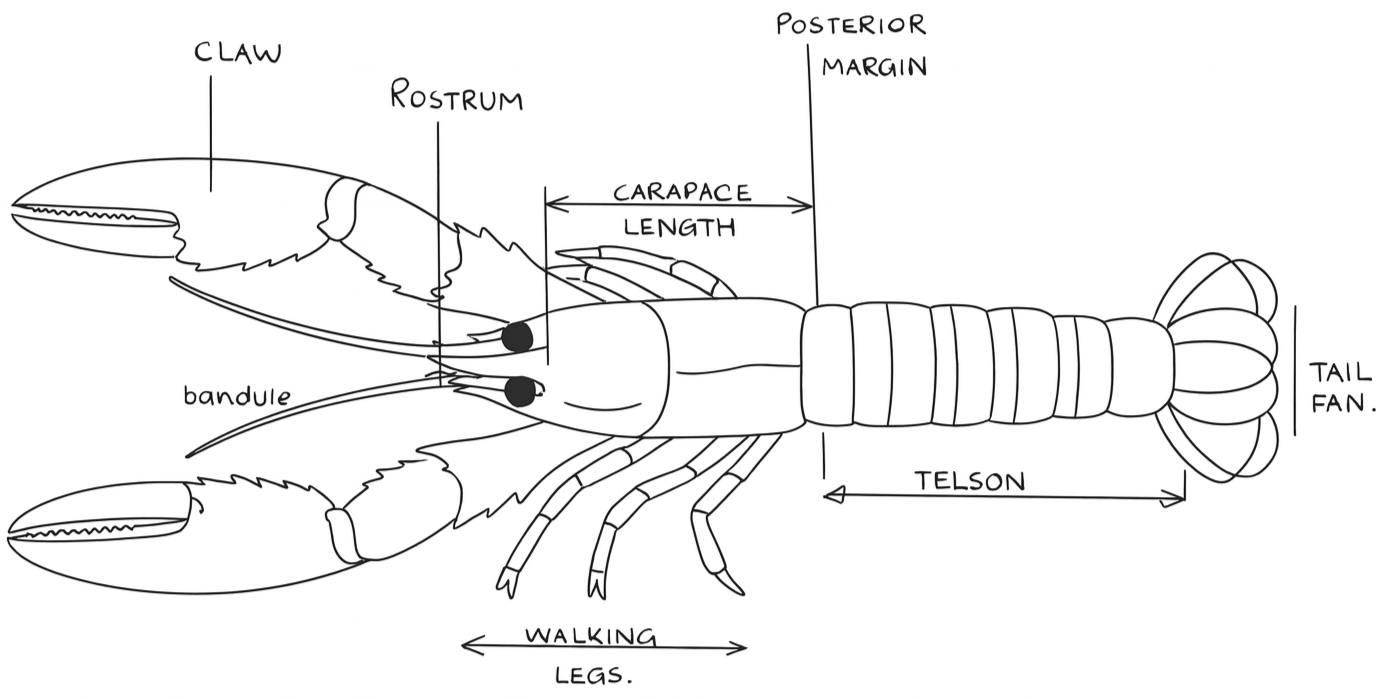
| EU Size Grade | Carapace Length (mm) | Count per kg (Whole) | Count per kg (Tail) | Industry Equivalent |
|---|---|---|---|---|
| Size 1 | >50 mm | <20 | ≤60 | Large (L) |
| Size 2 | 40–49 mm | 21–30 | 61–120 | Medium (M) |
| Size 3 | 31–39 mm | 31–40 | 121–180 | Small (S) |
| Size 4 | <30 mm | 40+ | >180 | Undersized (Juvenile) |
Notes:
- Size regulation defines biological and commercial measurement, not quality.
- Fisheries and buyers’ grade by size for packing count per kg , separating male and female to service the compliance requirements of buyers.
- Carapace length correlates strongly with total body weight and yield, making it the standard input reference for AI-based automation and grading.
Quality Regulation (EU Marketing Standards)
Quality grading is governed by EU marketing standards (Regulation (EC) No 2406/96, Annex I) and defines product freshness, appearance, odour, and physical integrity. Quality grading is independent of size and must be assessed at the point of first sale or landing.
Grade: Extra
Criteria: Exceptional freshness and appearance. Shell bright, natural colour, firm flesh, no damage, no blackening.
Description: Premium export and direct retail standard.
Grade: A
Criteria: Very good freshness. Minor surface blemishes allowed. Shell clean, odour fresh, minimal claw loss.
Description: Standard fresh market quality.
Grade: B
Criteria: Acceptable freshness. Some dulling or slight damage. May show light staining or minor shell damage.
Description: Industrial or processing use.
Grade: C
Criteria: Below standard. Dull, soft, or damaged product. Includes discoloured or heavily bruised material.
Description: By-product, bait, or chitin recovery stream.
Notes:
- Quality grading is determined by handling, storage, and time from capture to landing.
- Automation and digital recording can ensure consistent quality classification aligned to EU standards.
References:
- Regulation (EC) No 2406/96, Annex I.
- Sea fish SR559 – Good Manufacturing Practice for Nephrops Fishermen.
How We Implement This Onboard
The operational framework below is a Tide2030 reference used to engineer stable, repeatable pack outcomes onboard. It maps Carapace led sizing (whole product) and coarse size control (tails) into practical packing, labelling, and reporting streams, so product is processed once, packed right first time, and remains compliant as a defined lot from measurement to dispatch. Trading counts per kg are ultimately validated per fishery, season, and buyer specification.
Efficiency + compliance alignment (why this structure matters):
- One-pass process control: measurement happens once at the earliest stable point (size first), reducing rework, repeated handling, and downstream bottlenecks.
- Lot integrity by design: discrete, physical pack streams prevent size/quality mixing, which supports accurate marking, consistent pack specs, and cleaner reconciliation at end-of-haul/day.
- Audit-ready data chain: the framework links automation inputs (e.g., CL bands / size stream) to pack outcomes (count/kg targets, pack type) and QC outcomes (sex/QC flags), enabling defensible reporting against buyer specs and traceability records.
- Exception handling without line disruption: NC / dump streams and defined “out-of-spec” rules avoid stopping the line while keeping non-conforming product segregated and correctly recorded.
Notes:
- Size and quality are separate disciplines; Tide2030 keeps them separate in the line (Size first; QC/sex next) to avoid conflating measurement control with condition appraisal and to keep decisions auditable.
- Whole product: CL measurement is used as the automation input; count/kg is used as the trading/pack outcome target, with routine verification sampling to confirm pack conformity.
- Tails: conformity is typically less presentation-driven; focus is on controlling size to match weight outcomes (S/M/L plus an NC dump stream), with simple rules that protect pack consistency and labelling accuracy.
Market Regulation (EU 1379/2013 – Common Organisation of the Markets)
Market regulation defines how Nephrops are classified, labelled, and sold within the EU market structure.
It ensures traceability and consistency between catch, landing, and commercial sale.
Key Principles:
- All Nephrops placed on the EU market must comply with common marketing standards under Regulation (EU) No 1379/2013.
- Each batch must declare species, production method, catch area, and presentation form.
- Quality and size categories must be recorded at first sale and traceable through the supply chain.
- Automation provides a verifiable chain of custody between biological classification, commercial grading, and traceable market entry.
References:
- Regulation (EU) No 1379/2013, Articles 34–36 – Common Marketing Standards.
- Seafish Guidance on Traceability and Product Labelling.
Footnotes
- Regulation (EC) No 2406/96 of 26 November 1996 – Laying down common marketing standards for certain fishery products.
- Regulation (EU) No 1379/2013 of 11 December 2013 – On the common organisation of the markets in fishery and aquaculture products.
- ICES Nephrops Measurement Protocols (2024 Edition).
- Seafish SR559 (2022) – Good Manufacturing Practice Guidelines for Nephrops Fishermen
Welfare & Compliance
Handling and welfare are becoming central to Nephrops processing. Key trends include:
- Electrical stunning before processing, to meet welfare expectations.
- Rapid chilling to 0–2 °C for meat quality and food safety.
- Returning berried females and undersized individuals alive to the seabed.
- Traceability systems aligned with MSC/FIP and the new Scottish Quality Langoustine (SQL) scheme.
Explore how these welfare measures are being applied on vessels in the Fisherman Briefing.
Automation & Grading
Modern Automation & Grading
Traditionally, Nephrops have been sorted and packed by hand, but this is changing rapidly. New onboard systems now combine:
- Solutions for separation of bycatch and target catch pre process.
- AI grading for precision harvesting and grading of whole and tailed catches.
- Inline misting and chilling solutions for shelf life extension.
- On pard packing solutions for retail-ready chilled and frozen packs at sea.
- Digital compliance tools to help fishermen administer their production.
These systems are now being trialled and rolled out on vessels across the UK, Europe and the Nordic basin — often under the Tide 2030 programme, which supports a phased, commercially realistic adoption pathway towards consistency , improved quality and increased profitability.
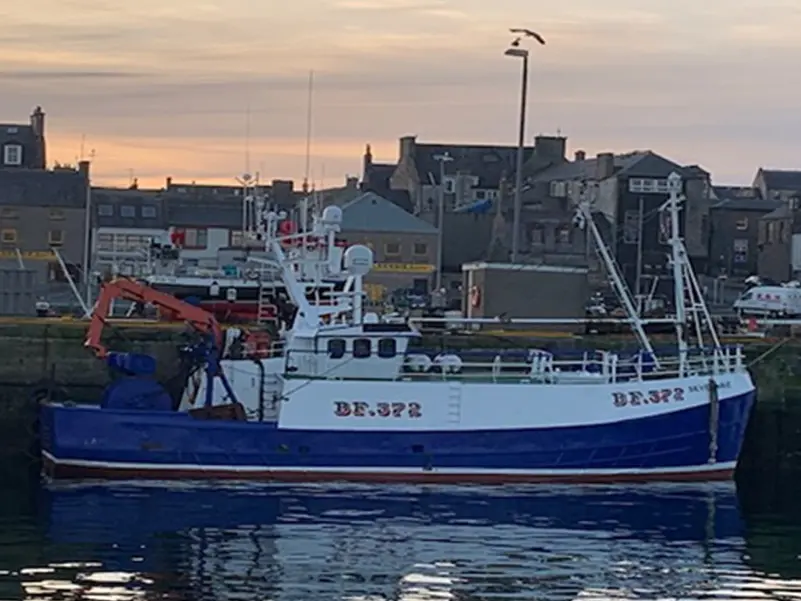
Automation only matters when it works under real commercial conditions. Tide 2030 trials test grading, handling, and compliance systems onboard working vessels — measuring what performs, what fails, and what scales.
Understanding Nephrops
Nephrops are highly sensitive marine species. Their unique physiology presents specific challenges during harvesting:
Our Solution
To address these challenges, we have developed a system that prioritises Nephrop welfare while ensuring sustainable management and consistent product quality.
Key elements of our approach include:

Nephrop Harvesting System
Polar Systems’ have created a comprehensive modular processing solution, designed to address the processing requirements of Nephrops, while meeting the universal demands of applications for small to large trawlers. By automating critical processes, we ensure greater efficiency, consistency, and productivity on board.
Automated Bycatch Separation:
Reduces the need for manual sorting of the catch.
Value: Streamlines production, reduces labour whilst increasing productivity.
Automated Pre-Grading:
Removes undersized target catch from the harvesting process ensuring sustainable return to the ocean quickly.
Value: Reduces labour, improves workflow, and ensures sustainable practices.
Ai Tailing and Grading:
Precision tailing, categorised grading by size and weight.
Value: Removes labour from the process, ensures consistency, and enhances market value.
Advanced Stunning Technology:
Unique technology delivers precision stunning / euthanising to animals individually.
Value: Aligns with current recommendations for good welfare practice, improves quality, and increases productivity.
High-Speed Processing:
Handles capacities ranging from 5 to 60 stone of finished product per hour, ensuring streamlined operations without the need of labour for processing tasks.
Value: Removes the need for manual processing, reduces processing time, improves quality whilst facilitating additional time for crew to service other essential functions of their work
Key Regions & Fisheries
Scotland
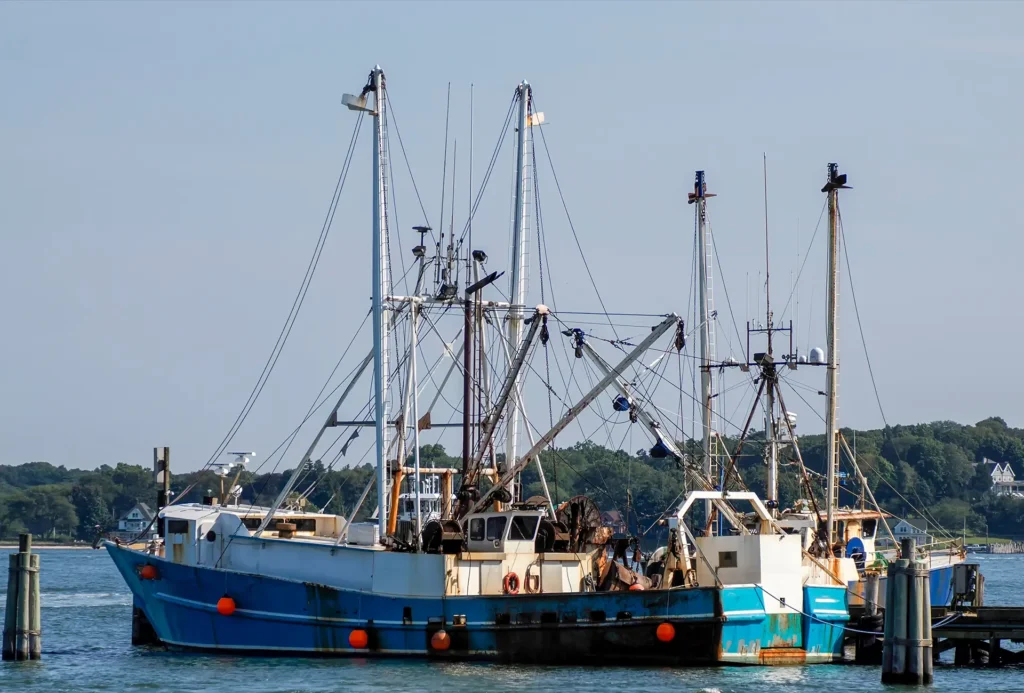
Fraserburgh, Peterhead & Shetland host the UK’s largest Nephrops fleet. Vessels range from small day boats to 25 m twin-riggers, increasingly interested in automation to address labour shortages and compliance requirements.
Ireland
The Dublin Bay prawn fishery in the Irish Sea and Celtic Sea is a cornerstone of demersal landings. Key ports: Clogherhead, Kilkeel, Howth. Sustainability pressures are driving interest in humane handling and traceability.
Norway
Norwegian vessels target Nephrops in fjord systems and on the shelf edge. Known for high-quality live exports and interest in technically advanced onboard processing.
Different fisheries face different pressures — from labour and compliance to market access and technology adoption. These regional differences shape how change happens in practice.
Tidal Shift tracks what’s moving across fleets, harbours, and regions — month by month — as these changes take shape.
Frequently Asked Questions
What’s the difference between langoustine and Dublin Bay prawn?
They’re the same species — Nephrops norvegicus. Different regions use different names.
Why are size grades important?
They determine compliance with regulations, product quality, pricing, and eligibility for certain markets (e.g. MSC/SQL schemes).
Are there welfare requirements for catching Nephrops?
Yes. Best practice now includes electrical stunning, rapid chilling, and returning berried or undersized individuals.
Can these new systems be retrofitted to existing vessels?
Yes. Tide 2030’s framework is designed for modular adaption and customization for individual vessels.